UNECE and partners spotlight eTIR National Application as one of the first UN developed open source Digital Public Good

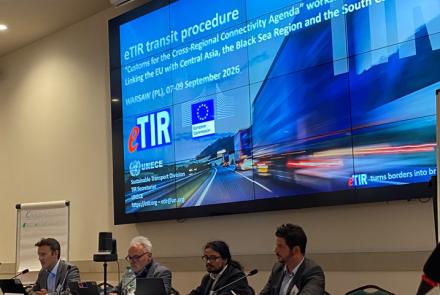
At the UN Open Source Week, at UN Headquarters in New York on 22-26 June 2026, the global open-source community came together for its annual gathering. On this occasion, UNECE together with UNOHRLLS convened a specialist panel which highlighted how the eTIR International System as digital public infrastructure and the eTIR National Application, as a digital public good, are accelerating the digital transformation of global transit, with particular emphasis on benefits for LDCs and LLDCs
Main takeaways
- eTIR as Digital Public Infrastructure — UNECE showcased the eTIR International System as interoperable DPI
- eTIR National Application — Open source, scalable, interoperable Digital Public Good, accelerating transit digitalization.
- Real‑world impact and adoption — Ten countries are already interconnected , with more preparing deployment; eTIR reduces costs, risks, data errors, border delays, and emissions.
- Open‑source for inclusive transformation — Open‑source Digital Public Goods strengthen interoperability, support LLDCs and LDCs, and offer models replicable beyond the transit sector.
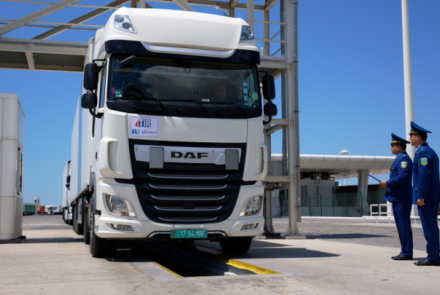
UNECE highlighted how the eTIR procedure and the eTIR National Application are accelerating the digital transformation of global transit. The TIR Convention - serviced by UNECE - remains the world’s only global customs transit system. Its digitalization through the eTIR procedure and relevant applications eliminates the need for handling physical TIR carnets, reduces customs fraud, paperwork, border waiting times, and associated carbon emissions.
As one of the first UN‑developed open‑source Digital Public Goods, the eTIR National Application is now available through the UN open‑source platform, enabling countries to adopt interoperable, cost‑effective, and scalable digital transit solutions.
With the participation of experts from the European Commission’s DG TAXUD, UNCITRAL, Mongolia, Czech Republic and Nepal, discussions focused on how United Nations-supported Digital Public Infrastructure (DPI) and open‑source tools and applications are reshaping cross‑border operations and spearheading digital transformation for sustainable development.
Speakers underscored the eTIR ecosystem as a successful, operational example of digital transformation, with a growing number of UN Member States adopting the system. The eTIR National Application allows TIR Convention Contracting Parties to customize and integrate the solution into national customs systems, enabling seamless cross‑border connectivity for transit operations.
To date, 10 countries are interconnected to the eTIR International System either directly or through the eTIR National Application: Tajikistan, Kyrgyzstan, Ukraine, Moldova, Türkiye, Uzbekistan, Georgia, Azerbaijan, Pakistan, and Tunisia, with live operations already underway between Kyrgyzstan and Tajikistan and several more preparing for roll-out.