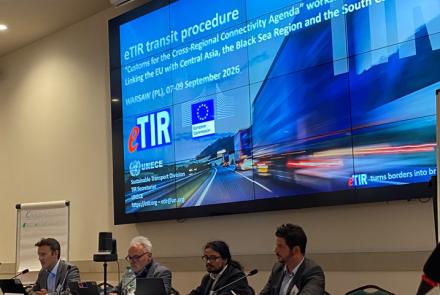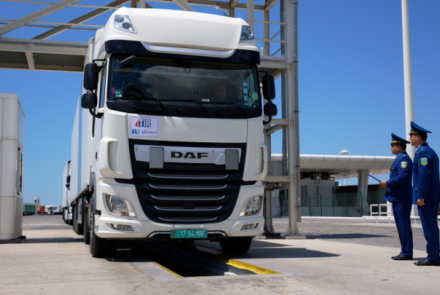
eTIR expands across the Caspian Sea, enabling the first paperless TIR transports between the South Caucasus and Central Asia
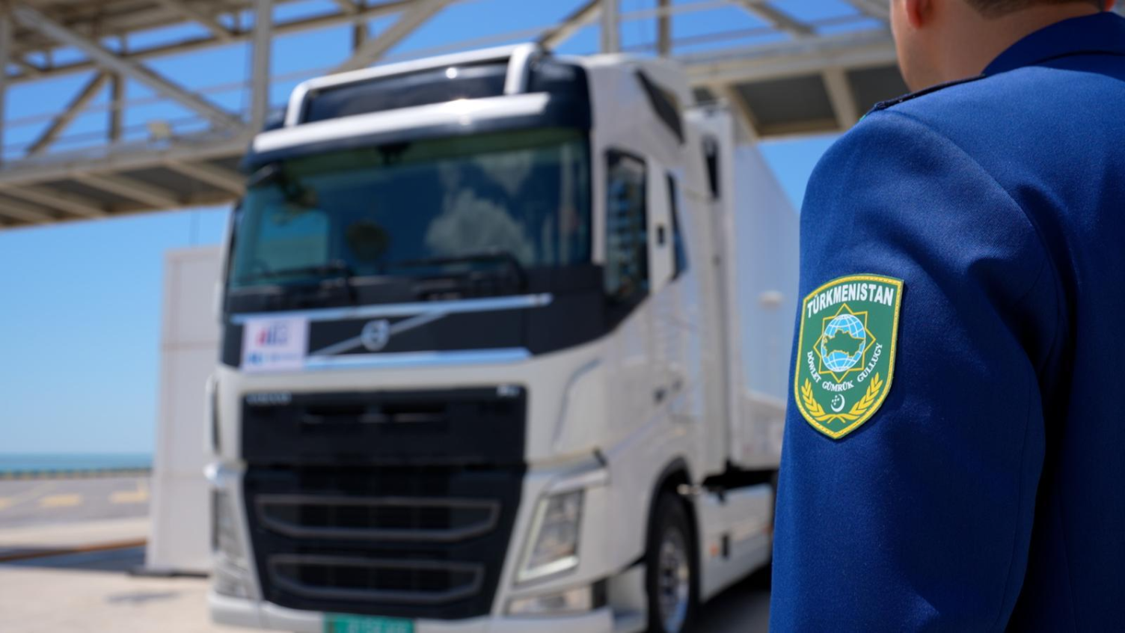
Uzbekistan and Tajikistan open a digital corridor
Uzbek Customs handled its first eTIR operation on 7 July 2026, releasing a load of bulk materials arriving from Tajikistan. The two administrations had until then exchanged transit data on paper.
The transport followed a training programme, that the UNECE TIR secretariat and IRU delivered to the State Customs Committee of Uzbekistan, bringing together officers posted at the country's busiest TIR crossing points so that the procedure could be applied consistently at every border.
A single procedure across three territories
Five further transports were completed in the last week of July on a route combining road and sea.
Travelling east, one vehicle loaded with electronic equipment departed on road, then by sea, from Azerbaijan to the port of Turkmenbashi, drove the length of Turkmenistan and was admitted into Uzbekistan at Farap. Its itinerary exceeded 1,200 km. No previous eTIR transport had been covered by one procedure across three territories.
Travelling west, four vehicles carrying cotton, fruit juice, bottled water and confectionery were cleared for departure in Turkmenistan and ferried across the Caspian Sea to Alat, the port serving Baku.
Throughout the six TIR transports using eTIR procedure, the customs offices exchanged declarations and guarantee data in real time through the eTIR International System, hosted and supported by UNECE. Drivers presented no transit document at any border.
Built on an open-source solution from UNECE
Uzbekistan, Turkmenistan and Tajikistan carried out every step of the eTIR procedure using the eTIR National Application (eTIR NA), open-source software developed and maintained by the UNECE TIR secretariat and supplied at no cost to Contracting Parties to the TIR Convention.
The eTIR NA gives customs a faster option to implement the digital eTIR procedure. Instead of implementing a direct interconnection between their national customs systems and the eTIR International System, they can deploy the open-source application and begin TIR operations, then address the deeper integration work later. Azerbaijan took the first route, exchanging data straight from its national customs system.
Electronic guarantees for the transports were issued through the international guarantee chain, with the IRU member associations ABADA in Azerbaijan, THADA in Turkmenistan and ABBAT in Tajikistan.
Background
The eTIR procedure is the digital form of the customs procedure from United Nations TIR Convention, the only global customs transit system. Annex 11 to the Convention, in force since 2020, provides the legal basis for operating the system without paper.
The eTIR International System, managed by the UNECE TIR secretariat, ensures the secure exchange of data between national customs systems, the authorized transporters (Holders), and the guarantee chain for international transit of goods using the eTIR procedure.
Removing paper from the procedure shortens customs formalities at the border, reduces human errors, lowers the cost of a transit operation, and gives customs earlier and better data for control and risk management.
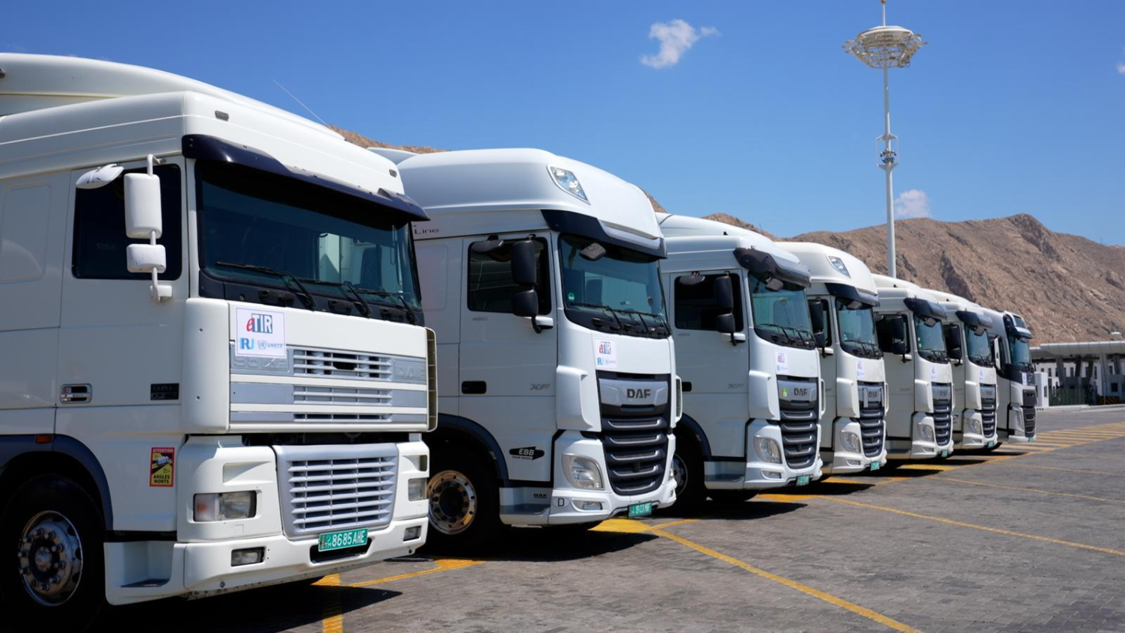
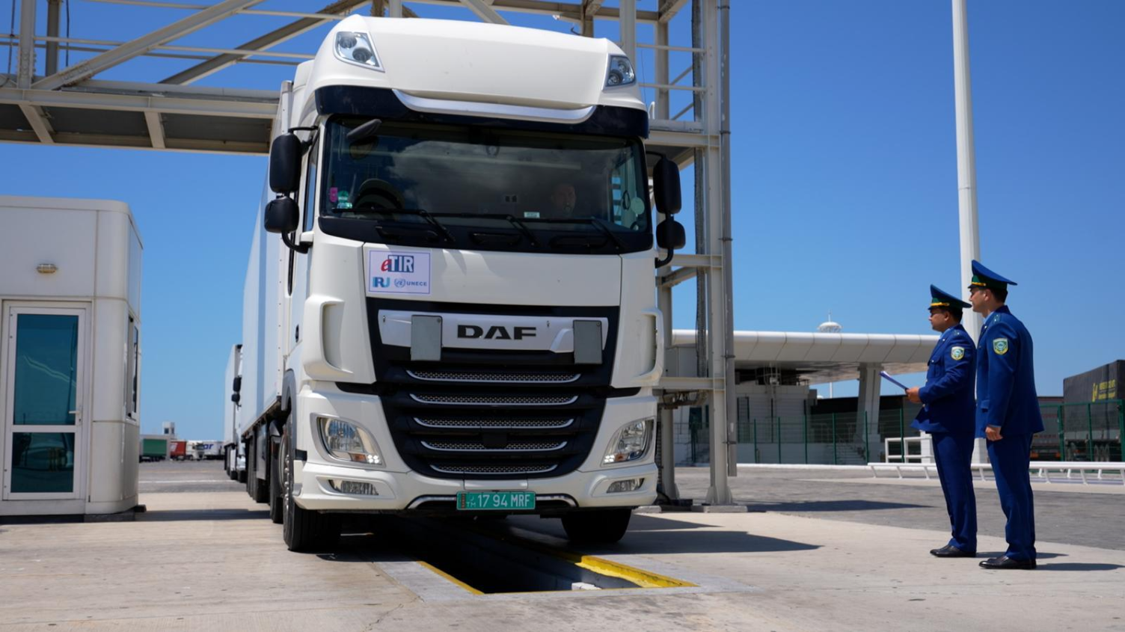
Photo credits: Vakhtang Zarandia (IRU)
- Log in to post comments